


20 Things You Need To Know About Robotic Vacuum Cleaner Best
페이지 정보

본문
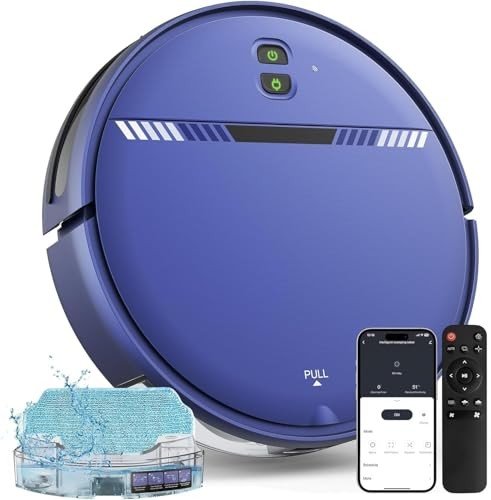 What Makes a Robot Vacuum Cleaner best robot vacuum cleaner?
The best auto vacuum robot vacuums have a a powerful motor and a bristles or rollers that are tough. They also have adequate dustbins as well as a long battery life.
Some models use smart mapping to map homes, and they can stop, recharge and then resume cleaning right where they stopped. They can create zones that are not allowed to enter, and can identify different surfaces.
Object Avoidance
Object detection is an essential feature of robot vacuums since it allows them to avoid getting into small objects like socks, shoes, toys or cords that aren't on the automatic Floor cleaner but on furniture or other items. These systems employ an integrated camera to identify objects in an AI database, and then instruct the vacuum to stay clear of them. The Eufy S1 Pro, for example, utilizes a mix of sensors, including 3D Time of Flight (sending light pulses to measure the distance and depth of the surrounding objects) and 3D Structured Light (beaming a pattern of lights onto the room and analyzing the light distortion to create a map) to efficiently steer away from obstacles.
Artificial intelligence and visual interpretation are a more recent innovation in robot obstacle avoidance. They allow robots to understand and recognize what they come across. This software works with one or two cameras to view the world around them and analyzes it in real time. This software is used by ECOVACS DEEBOT to detect up 30 different objects, which includes cables and shoes.
Certain models also use LiDAR to navigate. The technology emits laser beams and measures the time it takes for them to bounce back at surrounding surfaces to create a live, 3-D map of the environment. This can be used to identify furniture, walls and even stairs. It might not be effective in dim light or with reflective or transparent objects.
No matter what sensors or cameras are utilized regardless of the camera or sensor, a long battery life is essential to ensure that your robot is able to complete the entire house without needing to return to its dock to recharge. Find a model that can run for at least an hour or more, depending on the size of your living area.
Bases that self-empty
Certain robot vacuum cleaners come with self-emptying bases. This can reduce the frequency you must empty your bin. They are considered to be a premium feature and can increase the cost of a robot vacuum cleaner.
The best robots come with bases that can either hold either a bin or a dustbin that is easy to open and empty when full. This can save you time by decreasing the amount of time you spend worrying about when to empty a dustbin.
The robots we examined have self-emptying bases, except the Roomba I3+. This is a shame because the robot performs extremely well. It has the highest mapping performance of all the robots that we tested, and it has superb navigation capabilities. It also has excellent mower power, as well as a docking station that can automatically empty the water tank if it is required.
It doesn't come with iRobot's sophisticated obstacle avoidance or digital keep-out zones, though it is hung over cables and rugs and doesn't have the ability to detect shoes and socks that aren't in order. That said, it's an excellent option for an apartment that is small and well-maintained.
Other highlights are its navigation technology, which includes bump sensors and drop sensor, and its ability make your home a map by using lasers and cameras. It is easy to use, has a range of settings and modes that are effective when cleaning robots for home or mowing. Another advantage is its smart-home functionality, that allows it to function with voice commands using Amazon Alexa and Google Assistant. That can make it easier to use if you have multiple tablets or smartphones and don't want to grab a remote.
App Controls
Some robots connect to Wi-Fi, which allows you to control them with your tablet or smartphone. This is particularly beneficial for homes with multiple floors. You may have to climb a staircase to reach the robot before it is able to reach the bottom. This eliminates the need for an additional long cord to move furniture without worrying about the robot getting tangled in it or running out power when cleaning.
The app functions as a central control point to monitor and schedule tasks. The app allows you to alter the power, cleaning mode and the water level of your robot cleaner. This feature is particularly useful inside homes that have multiple floor types -- for instance, carpet and tile because you can assign the robot to clean every room using the appropriate power and mode.
Certain models have an inbuilt camera that can send a live feed to the app. These models are a great option for pet owners or parents of children who want to monitor the robot as it works. Some smart robots also have sensors that detect when they've reached the edge of a room, and return to their base to dock. This prevents them from overrunning the area and ensures that they've cleaned all the surfaces in your home.
Certain models automatically empty the dustbin and even blow dry and wash its mop heads between cleaning sessions. This helps reduce the need for manual maintenance and helps keep the cleaner running smoothly for a longer duration. There is also models with an extended battery duration, which helps you avoid the hassle of mid-cleaning recharges.
Sensors
Many robot vacuums utilize sensors to navigate your home and work on hard floors such as wood, tile and laminate as also low pile carpets and area rugs. They're not a replacement for a full-size, upright or canister vacuum cleaner, but they offer excellent suction on dust and dirt and can be a great way to keep your floor clean between deep cleanings using a traditional machine.
Sensors enable the robot to navigate around your home by detecting obstacles, and avoiding falling on steps. You can also create virtual and physical "no go" zones by using boundary strips or a virtual wall (like the ones employed by eufy), to prevent the robot entering specific areas of your home. Some robots have cliff sensors which alert you when your robot is set to fall into an obstacle.
The type of navigational system robot employs is determined by your budget and home layout. The most advanced robotic vacuums utilize LiDAR sensors to map and scan areas to ensure precise navigation. These systems can be expensive, but they provide the most efficient results. The budget models that have basic navigation bumps aren't as precise and may miss places. These models are effective in avoiding major obstacles but can miss dirt in crevices or around baseboards.
Choose a model that has a large dust bin and long battery life. There are also models that recharge and then resume the same place they left off after they dock to help save time. You can get the most value from your robot vacuum as well as navigation, by preparing each cleaning session. Check that all power cables or toys, as well as other debris is removed of the path of the robot and empty the trash bin after each cleaning. Also, wipe down the sensors and charging ports to keep the robot in good health.
Navigation
The best robot vacuums use mapping technology to create a digital map of your home prior to the initial cleaning session. It helps them recognize patterns, like hard and carpeted floors and ensures that all areas are thoroughly cleaned. It also prevents your robots from having to clean the same areas repeatedly, which can improve efficiency and decrease battery consumption. Many high-end models have the option to save a map of your house to use in the future, which is great for larger homes.
The majority of robotic vacuums come with some form of obstacle avoidance, which keeps them from crashing into shoes, cords, or socks. These sensors do not always detect smaller items. Manufacturers began adding sensors to robots in the past few years. This enabled them to identify and avoid objects that traditional sensors could not. These include cliff sensors and wall sensors that operate by reflecting infrared beams light off surfaces to determine distances.
Some of these sensors are built in the robot's base while others require you to purchase an additional attachment. These sensors generally aid the robot in navigating in a safe manner and avoid falling down steps and keep clear of clutter. Some models have anti-drop sensors that automatically stop the robots from crashing against furniture and walls.
LiDAR mapping, the most advanced navigation system is a feature that you should look for when buying the robot vacuum. This type of system uses the spinning laser sensor that is placed on the top of the robot to map your home. By bouncing infrared beams off of your walls and furniture it is able to determine the layout of your home. This information then helps it plan efficient paths and also clean your home.
- 이전글15 Startling Facts About Replace Window Handles That You'd Never Been Educated About 25.01.12
- 다음글Why Is It So Useful? In COVID-19? 25.01.12
댓글목록
등록된 댓글이 없습니다.