


You'll Be Unable To Guess Infant Car Seat Uk's Secrets
페이지 정보

본문
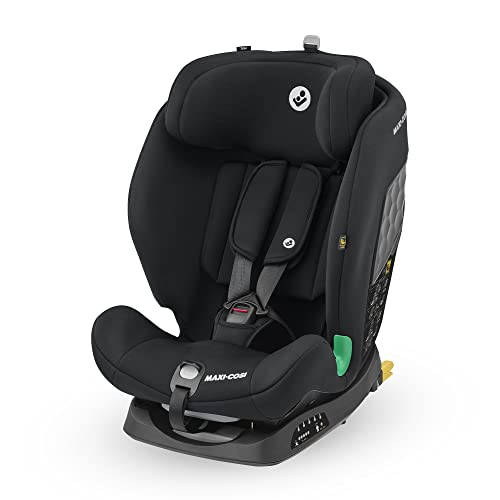 Choosing an Infant Car Seat in the UK
In the UK All children in the UK are required to use a child's seat until they reach a certain height or age. Selecting the right car seat is crucial to ensure the safety of your child.
This rear-facing car seat is described as one of the top by the consumer advocate Which? It comes with a baby-hugging insert and also an enhanced G-Cell defense against side-impacts. It also has a rotation function that lets you adjust the seat in the optimum position for your vehicle.
Rear-facing
Rear-facing infant car seat rear facing car seats are made to keep babies safe from neck and head injuries during the event of a crash. Children who ride forward-facing car seats are seven times more likely to sustain serious injuries than those who use rear-facing. Car seats that are rear-facing for infants are usually positioned on the back seat, and are lighter and smaller than convertible child safety seats. It is recommended to always use an infant car seat uk car seat that is rear-facing until your child is no longer using it, or is at the weight or height limits for forward-facing use.
There are two types of car seats: convertible car seats and all-in one car seat. Both are safe for your baby, however each has its own benefits and drawbacks. Convertible car seats start out with a rear-facing position and can be turned around to face forward when your child is old enough. All-in-one car seats have a higher rear-facing weight and height limits, so your child is able to safely sit in the seat for longer time.
Before you choose a rear-facing car seat your baby, make sure it is compatible with your vehicle and is properly installed. There are instructions for installing the seat on the labels of the manufacturer as well as in the owner's manual of your vehicle. Test the straps on the seat to make sure they are tight and secure. Also, ensure that your child doesn't get a fold on the material of the harness. Avoid wearing bulky clothing that might hinder straps.
Rear-facing seats are safer for babies than forward-facing seats because the force of the crash is less likely to be dissipated when the infant is in the seat. Additionally, rear-facing car seats offer greater protection for infants who are ejected from a vehicle in a side impact accident.
If your baby outgrows the rear-facing infant seat, think about switching to a convertible car seat that has a high rear-facing weight limit and height. A majority of convertible car seats have rear-facing limits that permit your child to ride in the seat for over two years.
Forward-facing
You can turn your baby around to face forward once they are outgrowing the rear-facing infant seat. However, you shouldn't do this until they have reached the height and weight limits set by the manufacturer of the seat. It is also advisable to talk to your child's pediatrician.
The laws of physics and safety research have shown that children under two years older are more secure when they travel infant car seat in a rear-facing seat. They will be able to relax more comfortably in their seats, and are less likely to be injured by the belt or airbag. This is especially important for infants whose necks and bones are still developing. The i-Size guidelines recommend that toddlers and infants sit rear-facing until at least 20 pounds or 12 months old, and some experts advise not waiting any longer.
If your child gets out of the rear-facing car seat you can move them to an automobile seat that is convertible or has five-point safety harness. These seats are designed to cradle your growing child and are often equipped with a movable newborn positioner. They are available with a base so they can be used in a variety of vehicles, and you can purchase additional bases if you have more than one vehicle.
It is also recommended to use a car seat with an adjustable headrest for infants up to 20 pounds. The headrest should be placed slightly forward but not more than 300 degrees from vertical. It must also be able to cover the baby's ear. The baby's airway could be blocked when the headrest isn't set back enough. In addition, the car seat should not be set at an angle that can cause a herniated disc to form in the spine.
In a crash, a young child can be thrown out of a forward-facing car seat, and this could be fatal. You can put a rolled up pillow or towel under the seat's base to help it recline. This will make your child more secure in the car.
In addition to protecting children from falling out of their seats, there is evidence that a rear-facing car seat can minimize leg injuries during collisions. In a frontal crash the legs of a baby facing forward could fly upwards, striking the back of the car seat. This can cause serious injuries. In a rearward-facing chair the child's leg will not strike the seat, and the harness can cushion the impact. This will lower the risk of injuries.
Multi-group
There are a lot of choices for infant car seats, however, not all are suitable for your baby's needs. A multi-group infant car seat is one that can accommodate your baby from birth until around the age of four, and can be used with nearly any pram. This type of seat comes with an adjustable harness to safeguard your child, and it is designed to grow with your child, with features such as an adjustable headrest and side impact wings. Some of these seats are also designed to be able to rotate inside the vehicle, allowing you to change their position and give your child a better view of the road ahead.
A new generation of infant car seats is built on height and not weight, which makes them safer for your infant car seat cheap. This type of car seat, referred to as i-Size or R129, is EU-approved in the UK and all of them must be in compliance with strict safety requirements before they can be sold. The seat will have the label with an 'E' capitalized in a circle and also the letters 'R129'. These seats are easier to install and provide better protection against side-impacts.
Group 0+ and 1 car seats will be rearward-facing until your infant is at least 9kg weight after which they can be turned to face forward. They are fitted with a harness and are secured using either Isofix or the car seatbelt. Some come with a rotation feature which allows you to move the car seat from one vehicle to another without the need for a belt of the car. Some will fit on the majority of prams.
A group 1/2/3 car seat can be used until your child reach the age of 11 and are 105cm tall or until you decide to convert it into an adult booster. These are the most secure car seats, and are recommended by Which?. They feature a broad design and a one-handed recline option and at least 12 headrest positions. Some of them have an easy-to-use handle that can be easily stored in a suitcase.
Rotation function
One of the most important features of infant car seats is its rotation feature. It allows the part of the seat that holds the baby to spin on a separate basis, making it easier for parents to get the child in and out of the car. This feature is especially useful when the car has trunk or backseat that is compact. It can also make it easier to install a seat into another vehicle.
The rotation feature also makes it easier to reach the harness buckles without disturbing the asleep baby, and it's an absolute blessing when juggling toddlers while trying to get them into the car. Some seats with a rotating feature aren't capable of achieving this. It's worth reading online reviews about specific models to find out the quality of their performance.
Another crucial aspect to consider is whether the seat can be used with a stroller. Many brands offer this combination and is known as a travel system, and is a great option for new parents who want an all-in-one unit that will be used throughout all phases of their child's life. It's also a great option for families that live in an automobile-centric household, since it allows them to switch cars easily without disturbing the lightweight baby car seat.
Infant car seats are designed for newborns and infants until the age of one year. They are divided into four groups, Group 0, 1, 2 and 3. The Group 0 car seat, also referred to as infant or carrycots keeps the child facing backwards and is attached to the vehicle via an ordinary seatbelt or ISOFIX fitting. The Group 1 infant car seat best car seats generally connect to the base of the vehicle with LATCH which is a straightforward system for connecting most types of car seats.
 A group 3 car seat is usually a convertible seat that expands with the child from newborn to about four years old. These seats have an extended height and weight limit as well as an adjustable, padded headrest to protect the child from injuries in the event of a crash. The seats also come with a removable support wedge and a luxurious carrying handle, and a support bar that can be removed.
- 이전글Don't Make This Silly Mistake With Your Key For Smart Car 25.01.05
- 다음글What Is The Window Doctors Term And How To Make Use Of It 25.01.05
댓글목록
등록된 댓글이 없습니다.